Showing posts with label Survival Zombie. Show all posts

Sunday, September 21, 2014

What Would Ben Do?

A few posts ago I mentioned a Spanish zombie game, Survival Zombie, that offers participants the opportunity to survive an overnight outbreak. I want to take a moment to talk a little bit more about it, because I think it gestures towards something important. Already on its 9th edition, the game is attracting the attention of global news outlets, such as BBC News and Guardian Liberty Voice, for its ability to attract large numbers of players to gather together to enact the zombie themed games. Part RPG (role playing game), part flash mob, part audience-participation theater, the increasing popularity of the games around Spain shows no signs of abating any time soon: according to the BBC blurb, game organizer Diego de la Concepcion says he is booked up through 2015, and has already begun booking for 2016. Unlike a simple zombie walk – where everyone dresses up in their zombie best to stumble around and moan together – the Survival Zombie games ask participants to make it through the night without getting infected (i.e. touched by one of the zombies that populate the game, and turned into a zombie themselves), while costumed actors enact a full-scale military response to the outbreak. 
I know, right?
These games, in a way that video games can only vaguely approximate, give players a chance to find out how they would fare in a zombie apocalypse. Are they fast enough? Are they smart enough? Can they endure? One of the most subtle, but I would argue most persistent, explanations for the popularity of zombie fictions is that they offer their readers/viewers/players an opportunity to ask these probing questions of themselves. Of course, this is true of most fiction. No matter what someone reads or watches, at some level, they are asking how they would fare in that given situation. What would I do if my little dog and I were swept away by a tornado and dropped in a land of ornately dressed little people?

Oz Life!
Dance, Munchkins. Dance!

Would I round up the weirdest damned posse ever and go kill me a(nother) witch? Or would I rule over these tiny dancers with an iron fist and some fancy new shoes?

Okay, it occurs to me that most people might not ask the same questions of themselves that I would. But whatever. Fiction, at its best, doesn’t only present a different world, or time, or life to be observed by an audience; it lets people imagine themselves in those worlds, making those decisions, living those lives. Zombie fictions, however, in a way that is palpably different from other fictions (and even from other types of horror), push their fans to ask those “what ifs?” of themselves more urgently. I would argue that the reasons for this urgency are plain: zombies, in all of their gruesome, gory glory, represent any and every worst case scenario that could befall our culture. 
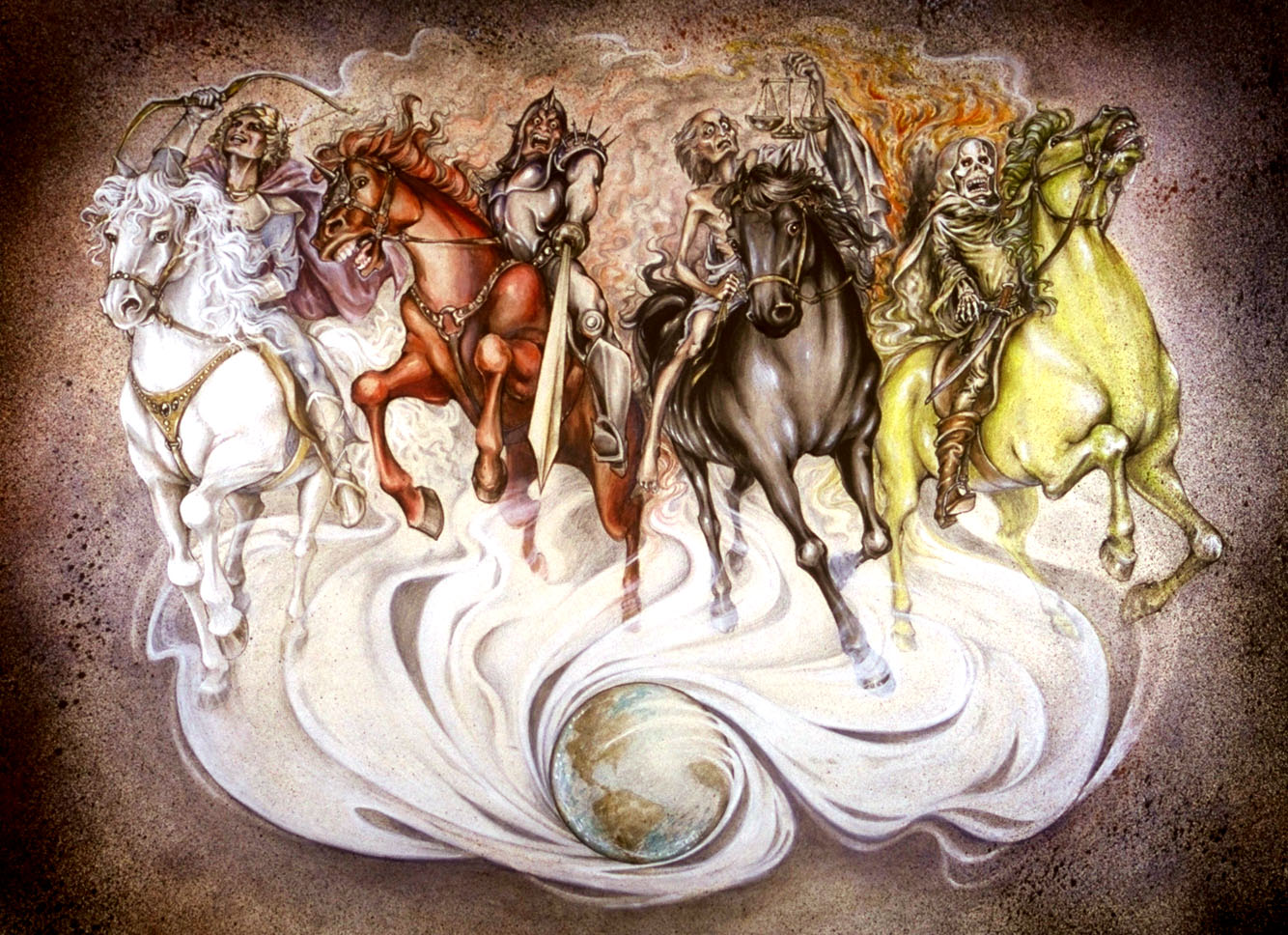
War, famine, pestilence, and death are all obviously accounted for, but so are extreme weather, political and scientific malfeasance, calamity from space (aliens, asteroids, solar wind, etc), financial crisis, and on and on and on. If the popularity of zombies points to anything about our culture, it is the pervasive sense that ours is a society on the brink. Of what, precisely, isn't relevant - it could be any one of the concerns listed above, a combination, all of them, or even some unforeseen cataclysm. More to the point, rather, is the unconscious (mostly) anxiety that the social order we have constructed will not be able to sustain itself under a catastrophe.

Starting with Night of the Living Dead, zombie narratives have haunted audiences by making them ask what they would do, as individuals, if the scientists didn’t know the answers; if the church told us we all had it coming; if the government collapsed or went into hiding; if the police and military weren’t coming. What would you do? Lead or follow? Survive or dissolve? Run, hide, or fight? The zombie outbreak, as an allegory for societal rupture, allows us to explore how we would react in the event that the thin veneer of “civilization” that supports our system were to crack, disintegrate, and fall. Games like Survival Zombie are just an extension of these self-inquiries, taken to well-orchestrated and well-organized extremes. Everyone these days has a zombie survival plan, even the Pentagon and CDC. Books and movies let you think about your plan; Survival Zombie (and other games like it) lets you put yours to the test.

Good luck.

Sunday, September 14, 2014

Zombies in the News


I don't know that zombies will show up in the news enough for this to become a sustainable feature, but I noticed a couple blurbs this week that I felt were worth commenting on. Before I get to that though, remember when that naked guy ate that homeless guy's face?


This all comes back to the damn meatloaf zombie face (I'm gonna make one). You talk about face-eating and bath salts on a zombie blog, and you have to bring up the "Miami Zombie" attack. Quick question, when you first heard about this story in 2012, what was the first thing that crossed your mind? Zombies? It was, wasn't it. Not cannibal. Zombies. Which, kind of highlights our cultural obsession with flesh eating dead people. My instinct was to argue that at any other time in history, this would have only been referred to as a cannibal attack (and to be fair, the attacker was also referred to as the Causeway Cannibal in the rush to brand this story), but the more I thought about it, the more I realized that depending on when in history it happened, the attack could have, and probably would have, been framed in terms of any number of "monsters": vampires, werewolves, ogres, demons, and so on. However, because the zombie is our current
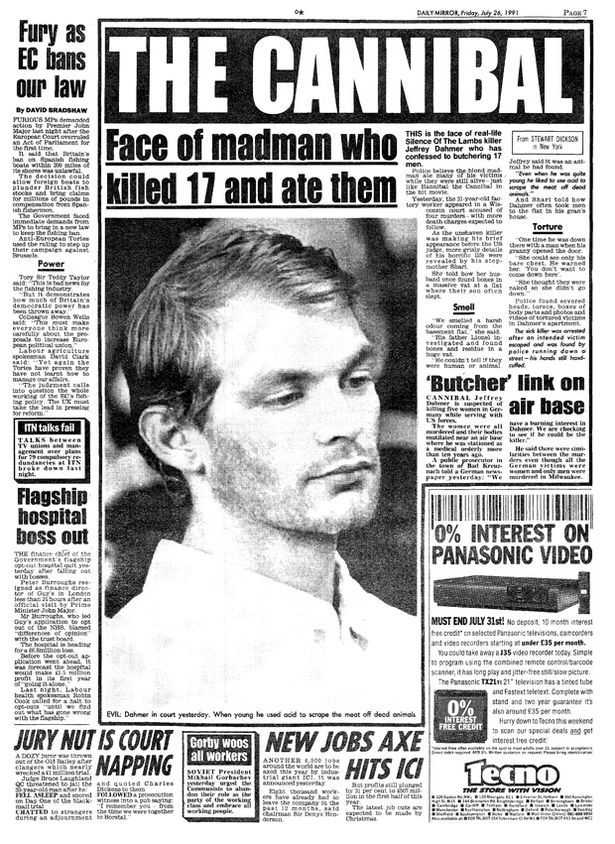
bogeyman par excellence, that was how most of us made sense of it. Well, that and the fact that it took four bullets to put the attacker down. But I would argue that even those of us that only thought of the attack as cannibalism and not the first step of the end of the world, had been conditioned to think of it that way, not by the dictionary definition of cannibalism but by the most well-known flesh-eating monster before the zombie renaissance, Hannibal Lecter (and probably not, interestingly enough, real-life cannibal Jeffrey Dahmer). 
Of course, this is hardly the first time that people have turned to their horror stories (though they were usually considered fairy tales or folklore then) in an effort to make sense of seemingly inexplicable real-world atrocities. In 1582, an otherwise normal and respected widower, Peter Stubbe, terrorized the women and children of his village with a string of cannibalistic murders as staggeringly brutal and horrific as anything you've ever heard or read or thought about. They did not call him a cannibal, though, and they certainly didn't call him a zombie: they called him the Werewolf of Bedburg. Fair warning on that link, from the page itself: The extreme cruelty of the crimes in this case, detailed [within], are highly disturbing and not for the squeamish, faint-of-heart, or young children. 

Not only does horror reflect the uncertainties and anxieties felt within any culture, then, it would seem that tales of monsters and bogeymen also serve to shape our understanding of those events that exceed the parameters we have set on reality. Which makes sense; when something happens that can't be explained away by anything you know or expect of the world, how else would you account for it but by turning fiction (whether that means taking meaning from existing stories, or creating new ones)? 

Oh, right. We were here for zombie news. The day after the
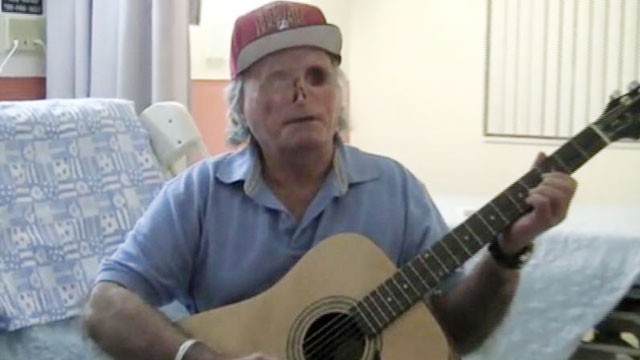
Poppo has refused further reconstructive surgery
zombie meatloaf face, I got real curious about whatever happened to Ronald Poppo, the homeless victim of Rudy Eugene's unprovoked and savage attack in Miami. I am happy to report that he seems to be doing surprisingly well. Although left blind and badly scarred, Poppo has put on 50 lbs since the attack and, with the help of an occupational therapist, has learned how to shave, shower, and dress himself. He spends most of his time playing his guitar and listening to Miami Heat games on the radio. 

As for Eugene, toxicology reports found only traces of marijuana in his system (no bath salts!), and no explanation has been identified for his apparent psychotic break. 

In other zombie news: It's all fun and games until you get shot in the face. This crazy person was arrested in Oregon earlier this week for "breaking into a house, pushing a woman down the stairs, pulling her hair, biting her on the face, and saying that she was playing 'the zombie game.'" 

I just don't get it, people. I started this blog with the question, and I still have no answer: Why does everyone want to be the zombie? Zombies break into houses (yay, fun!), zombies bite people (...), then zombies get shot and re-killed (see above). Awesome. Sign me up? I get that some of the zombie survivalists are, umm, pretty interesting individuals, but is biting strangers that much more enjoyable than stockpiling weapons and non-perishables? 

If you are going to play a "zombie game" why not play one where you start out uninfected? From the Reasons Spain is Awesome file, 2,000 people descend on Collada Villalba to play a much cooler game, called Survivor Zombie, by World Real Games. Check out this video of an earlier "edicion" of the game from last March 


A game where the goal is NOT to become a zombie? Sweet, sounds like good practice. I'm packed, when do we leave?